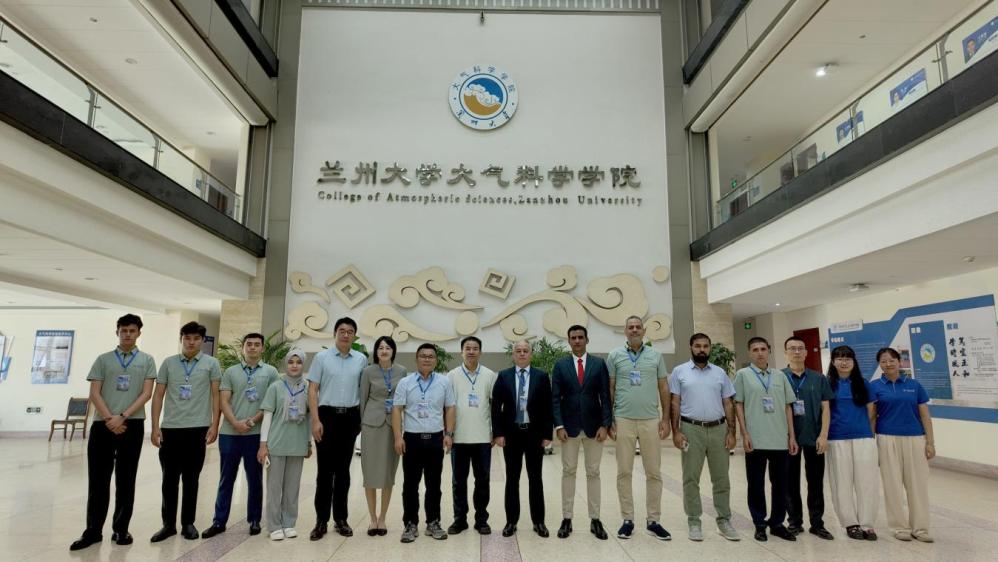
To better serve the Belt and Road Initiative and strengthen international cooperation on climate change, the Belt and Road International Summer School on Climate Change, hosted by Lanzhou University, was held in Lanzhou from August 24 to September 4. Experts, scholars and participants from seven countries including China, Morocco, Finland, Pakistan, Uzbekistan, Tajikistan and Algeria took part in the event, engaging in learning and exchanges covering cutting-edge theories and key technologies. Co-funded by the China Scholarship Council and the Global Disciplinary Innovation Base for Arid Climate Change, the summer school was jointly undertaken by Collegeof Atmospheric Sciences and the School of International Cultural Exchange, Lanzhou University.
Opening Ceremony: Discussing Climate Governance and Pursuing Green Development Hand-in-Hand
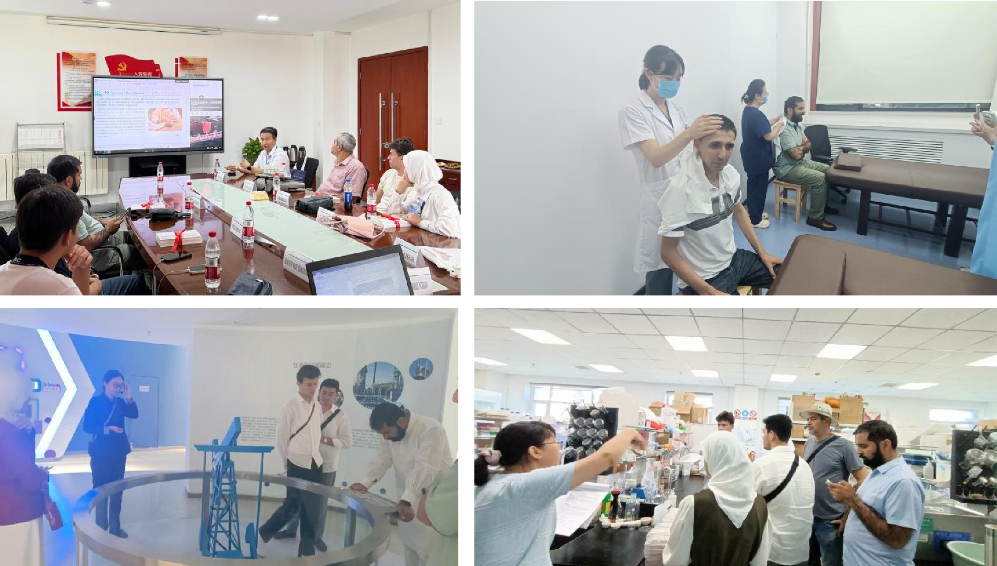
The opening ceremony was held in Room 1720, Guanyun Building, Chengguan Campus of Lanzhou University on the morning of August 24. He Junwen, Deputy Dean of the School of International Cultural Exchange, reviewed the university's century-long history since its founding in 1909. He emphasized that Lanzhou University has always upheld its university motto: Self-improvement and Unique Aspiration. As one of the initiators of the University Alliance of the Silk Road, Lanzhou University keeps advancing exchanges and cooperation among global higher-education institutions. He noted that climate change knows no national boundaries; it poses severe challenges while presenting opportunities for cross-border collaboration, knowledge sharing and capacity-building. Huang Zhongwei, Dean of Collegeof Atmospheric Sciences, stated that this summer school constitutes an important measure for the school to fully implement General Secretary Xi Jinping's important instructions on high-quality development of the Belt and Road, and deepen international cooperation with developing countries in the field of climate change. Professor Bakhriddin Nishonov from Central Asian University for Environmental and Climate Change in Uzbekistan, speaking on behalf of lecturers, pointed out that urgent challenges such as drought, desertification, water scarcity, sand-dust storms and environmental degradation call for extensive international cooperation and experience sharing. Sabab, a Pakistani participant representing students, shared insights on climate consensus, the spirit of cooperation, learning objectives and commitments for action. He remarked, “Climate knows no borders. When learning, connection and application are integrated, training brings transformation.” Oykiz, a participant from Uzbekistan, mentioned that visiting China had long been one of her dreams, and she looked forward to turning new knowledge, friendships and experiences into driving forces for her future growth.
Curriculum System Covering the Full Spectrum of Climate-Change Research
Closely aligned with frontier climate-change topics, the summer school adopted an integrated model of special lectures + case seminars + cultural experiences, to systematically improve participants'capacity to understand and apply cutting-edge climate-change theories and key technologies.
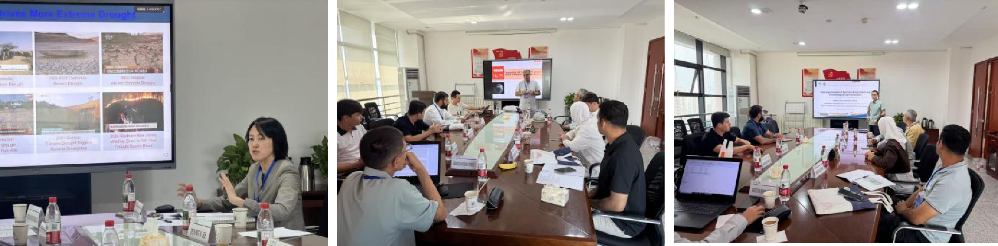
In special lecture sessions, numerous renowned domestic and international scholars delivered in-depth presentations on climate-change-related-themes. On semi-arid climate and desertification control, Professor Guan Xiaodan, Deputy Dean of Collegeof Atmospheric Sciences, Lanzhou University, systematically elaborated on semi-arid climate change and desertification governance. She explained that semi-arid regions cover approximately 15% of global land area and sustain 14.4% of the world's population, yet face grave challenges including poor soil quality and high sensitivity to climate change, making relevant research globally significant. In atmospheric chemistry and air-quality studies, Professor Abdelwahid Mellouki from Morocco gave a detailed account of atmospheric-chemical processes and air-quality-climate interactions. He highlighted functional mechanisms of atmospheric oxidants, volatile organic compounds and nitrogen oxides in secondary-pollutant formation, building a systematic cognitive framework for participants on mutual interactions between air pollution and climate change. Addressing sand-dust transport and trans-continental impacts, Professor Hu Zhiyuan from Collegeof Atmospheric Sciences illustrated a third pathway whereby African dust travels nearly ten thousand kilometers to East Asia. He revealed that Saharan dust contributes to roughly 24% of sand-dust events in East Asia, together with physical mechanisms through which aerosol-cloud-radiation effects alter regional weather and climate. He also demonstrated the vital supporting role played by the GCON observation network in trans-continental sand-dustresearch.
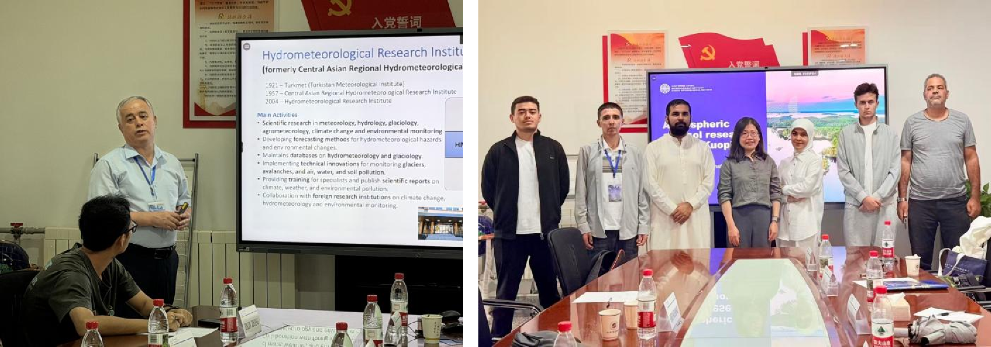
Professor Bakhriddin Nishonov (Central Asian University for Environmental and Climate Change, Uzbekistan) analyzed spatiotemporal patterns of sand-dust storms in Uzbekistan based on ground-based meteorological observations spanning 2010-2023. Research results showed that annual sand-dust days exceed 80 days across southern and western Uzbekistan along the Amu Darya River Basin, pointing to severe sand-dust hazards that demand coordinated regional governance. On polar research and remote-sensing observation, Dr. Shang Xiaoxia from the Finnish Meteorological Institute presented Finland's latest advances in active aerosol remote sensing, lidar observation and Arctic wildfire-smoke tracking, updating participants on cutting-edge global climate-monitoring technologies.
Turning to greenhouse-gas mitigation, Professor Long Ruijun discussed methane-reduction potential from ruminant livestock. Statistics indicate that livestock farming accounts for around 14.5% of total global greenhouse-gas emissions, among which methane generated via enteric fermentation in ruminants represents a large share. Curbing methane emissions in this sector has become one critical short-term pathway for slowing global warming. Professor Long also put forward practical mitigation solutions such as feed improvement, delivering work of both academic novelty and practical guidance value.
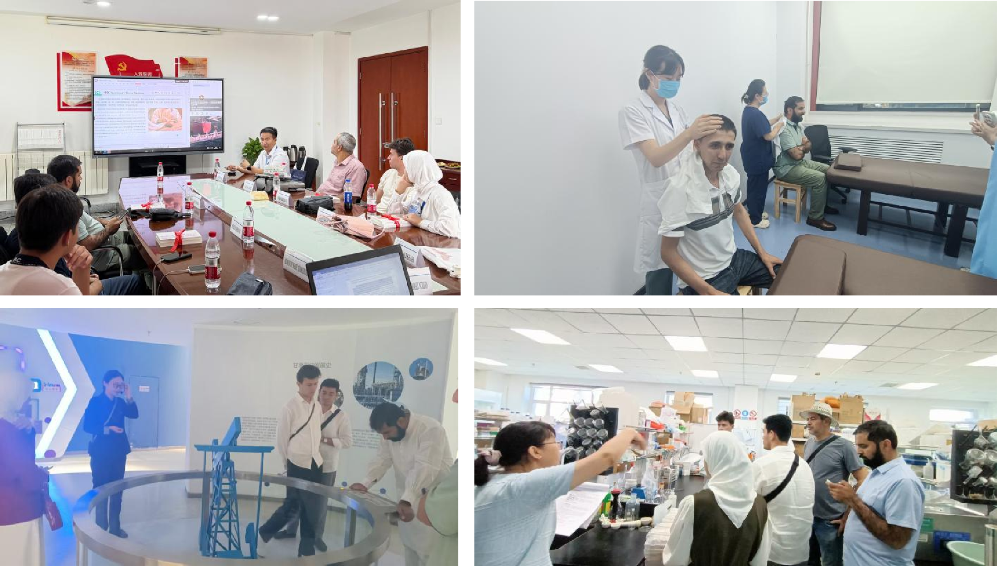
For cultural-exchange modules, Director Niu Junqiang from the First Hospital of Lanzhou University delivered a speech entitled Traditional Chinese Medicine and Modern Medicine: Dialogue instead of Confrontation. He systematically introduced TCM theoretical frameworks centered on Qi-Yin-Yang-Five- Elements-Zang-Fu-Meridians, alongside characteristic therapies including acupuncture and tuina massage, vividly showcasing the profound heritage and unique appeal of traditional Chinese culture embodied in TCM. Associate Professor Yuan Mei from the School of International Cultural Exchange gave a talk Discovering Gansu and Lanzhou, introducing historical values of world cultural heritage sites such as the Hexi Corridor, Mogao Caves and Jiayuguan Pass. Dr. Zhang Piao guided participants to appreciate semantic features of the Chinese language via phonetics, vocabulary, grammar and written-character examples combined with meteorological terminology, enhancing participants'understanding of Chinese language and culture.
Experiencing Chinese Culture and Promoting Mutual Civilizational Learning
On the afternoon of August 25, participants visited the Department of Traditional Chinese Medicine at the First Hospital of Lanzhou University. Under the guidance of Director Niu Junqiang, they had hands-on experience of traditional TCM therapies including acupuncture, tuina massage, moxibustion and cupping, and sensed the charm of TCM culture. Participants toured the Silk Road Civilization exhibition hall at Gansu Provincial Museum, gaining deep insights into Gansu's historical legacy as a cradle of Chinese civilization and a key segment of the ancient Silk Road through precious cultural relics such as painted pottery, bamboo and wooden slips, and the Bronze Galloping Horse. At Gansu Science and Technology Museum, interactive exhibits familiarized participants with achievements of modern-day Chinese scientific innovation. Furthermore, participants paid an on-site visit to the State Key Laboratory of Grassland Seed Innovation and Grassland Agro-Ecosystems of Lanzhou University, learning cutting-edge findings on grass germplasm- resource innovation and grassland agro-ecosystem research.
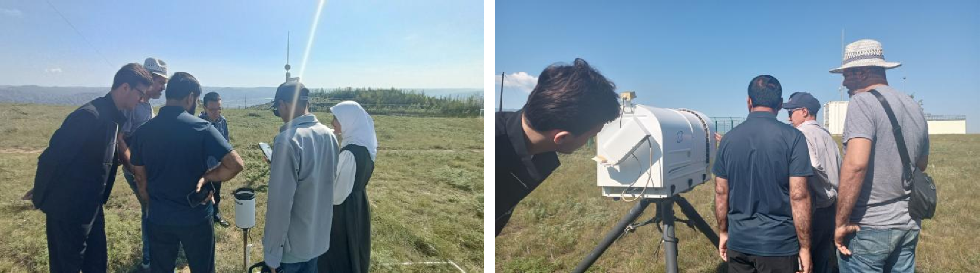
Field Study: Visit to the SACOL Station
On August 31, under the leadership of Professor Hu Zhiyuan, participants conducted a field investigation at the Semi-Arid Climate and Environment Observatory of Lanzhou University (SACOL Station) located atop Cuiying Hill, Yuzhong Campus. Established in 2006, the observatory sits at the intersection of the Loess Plateau, Inner Mongolian Plateau and Qinghai-Xizang Plateau, a transition zone covering three major natural-climate zones: the eastern monsoon region, the northwest arid region and the alpine plateau zone, granting it high regional representativeness. During the field trip, participants observed state-of-the-art international-grade observational instruments at close range. Professor Hu Zhiyuan detailed the station's development history and long-term fixed-site observational research focused on semi-arid climate and environmental studies.
Closing Ceremony: Building Consensus and Embarking on New Journeys
At the closing ceremony, Li Chunlin, Dean of the School of International Cultural Exchange, congratulated all participants for their successful completion of the summer-school program. She noted that over the past decade, Lanzhou University has hosted students from 97 countries, 93% of whom hail from Belt-and-Road partner nations — solid proof of the university's well-established international education capacity. Recalling participants'cultural experiences in Lanzhou, she encouraged them to bring knowledge, friendship and determination back home, adding that Lanzhou University will always be their home.
Professor Wang Tianhe, Head of the Department of Atmospheric Observation and Remote Sensing, Collegeof Atmospheric Sciences, spoke highly of participants'active engagement. He remarked that the summer-school curriculum covered a broad spectrum of topics: semi-arid climate dynamics, desertification control, sand-dust-storm genesis, trans-continental transport of African dust, permafrost changes over the Qinghai-Xizang Plateau, atmospheric-chemical mechanisms and methane-mitigation strategies. He expressed hopes for more research collaborations and academic outputs stemming from this exchange, and offered a message: “Science is not only about understanding the world, but about making it a better place.”
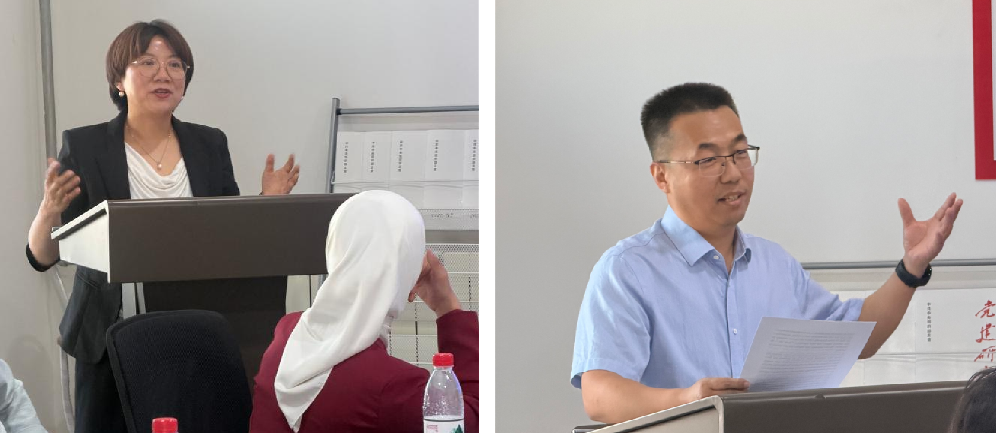
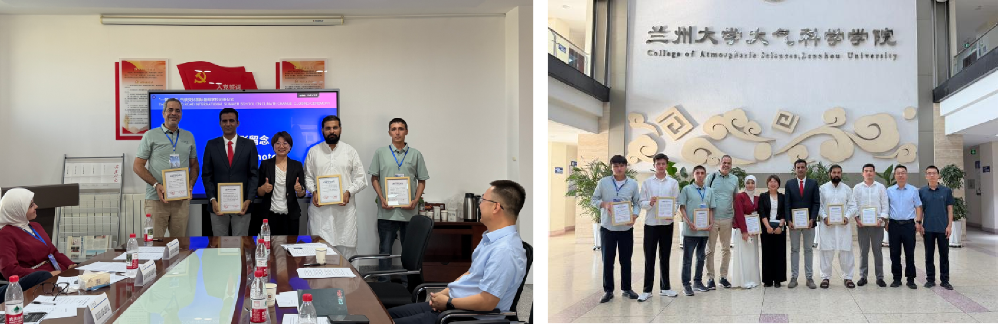
In the participant-reporting session, trainees from each country took the floor to share learning gains and profound reflections accumulated over the 15-day training period. Participants of diverse national and cultural backgrounds unanimously voiced deep concern for climate-change challenges and strong expectations for cross-border scientific research cooperation. At the end of the ceremony, present leaders awarded completion certificates to all participants, followed by a group photo of guests and trainees.
Looking Ahead: Jointly Advancing toward a Climate-Resilient Future
This summer school represents a major international-exchange event following the 2025 Belt and Road International Training Course on Climate Change hosted by Collegeof Atmospheric Sciences under the auspices of the Ministry of Science and Technology. These events provide a valuable academic-exchange platform for young scholars focusing on climate change across Belt-and-Road partner countries, and lay a solid foundation for pragmatic cooperation between China and relevant nations in climate-change science research and climate-action responses.
Leaving Lanzhou equipped with knowledge, friendship and resolve for climate action, participants have traveled across mountains and seas to attend the program. They will carry scientific insights and research methodologies acquired here back to their home countries, and engage in local climate-governance practices, taking solid strides toward building a climate-resilient and sustainably-developed shared future.
