From June 20 to 21, the progress seminar of the National Natural Science Foundation of China's Joint Meteorological Fund projects "Research on the Three-Dimensional Circulation Dynamics and Prediction Methods of Persistent High-Temperature Heat Waves in Eastern China", "Research on the Mechanism and Prediction of Tropical External Forcing Influencing Persistent High-Temperature Seasonal and Interannual Variations in the Middle and Lower Reaches of the Yangtze River", and "Research on the Mechanism and Prediction of Seasonal Changes in Remote Correlation with Summer Jet Stream" was held in Lanzhou, Gansu.
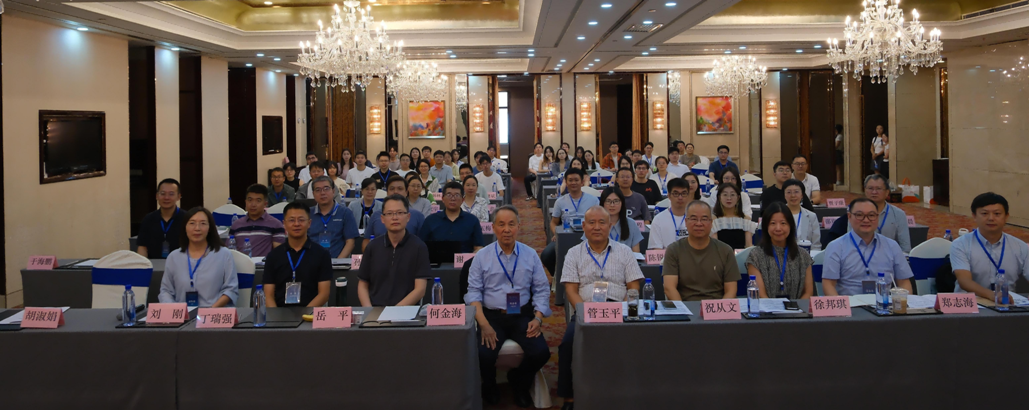
Meeting photos
This conference was jointly organized by three project host institutions: Lanzhou University, Nanjing University of Information Science and Technology, and the Institute of Atmospheric Physics, Chinese Academy of Sciences, with the support of the Dynamic Meteorology Committee, Subtropical Meteorology Committee, Climatology and Climate Resources Committee, and Meteorological Artificial Intelligence Committee of the China Meteorological Society, and hosted by the College of Atmospheric Sciences, Lanzhou University. The conference invited experts including Professor Jin Hai He from Nanjing University of Information Science and Technology, Researcher Guo Lin Feng from the National Climate Center, Researcher Cong Wen Zhu from the China Academy of Meteorological Sciences, Researcher Yu Ping Guan from the South China Sea Institute of Oceanology, Chinese Academy of Sciences, Researcher Ping Yue from the Lanzhou Drought Research Institute, China Meteorological Administration, Professor Bang Qi Xu from Nanjing University of Information Science and Technology, Professor Rui Qiang Ding, Professor Fei Xie, and Professor Cheng Sun from Beijing Normal University, Researcher Feng Shi from the Institute of Geology and Geophysics, Chinese Academy of Sciences, and Researcher Hai Peng Yu from the Northwest Institute of Eco-Environment and Resources, Chinese Academy of Sciences, to provide guidance. Over 90 participants, including project leaders and key team members, attended the conference. Professor Ji Ming Li, Vice Dean of the College of Atmospheric Sciences, Lanzhou University, Professor Zhi Wei Zhu from Nanjing University of Information Science and Technology, and invited expert Professor Jin Hai He delivered opening remarks on behalf of the conference host institution, project leaders, and invited experts respectively.
At the meeting, project leaders Hu Shujuan, Zhu Zhiwei, and Wang Lin (Zhang Wenqi) presented progress reports on their respective projects, detailing implementation status, key achievements, and future plans. They also addressed expert panel questions with thorough explanations. Team members shared updates on their research topics and actively engaged with expert feedback. The project leaders reiterated their commitment to advancing their initiatives while responding to expert inquiries. Team members demonstrated their dedication to research progress and attentively recorded expert guidance.
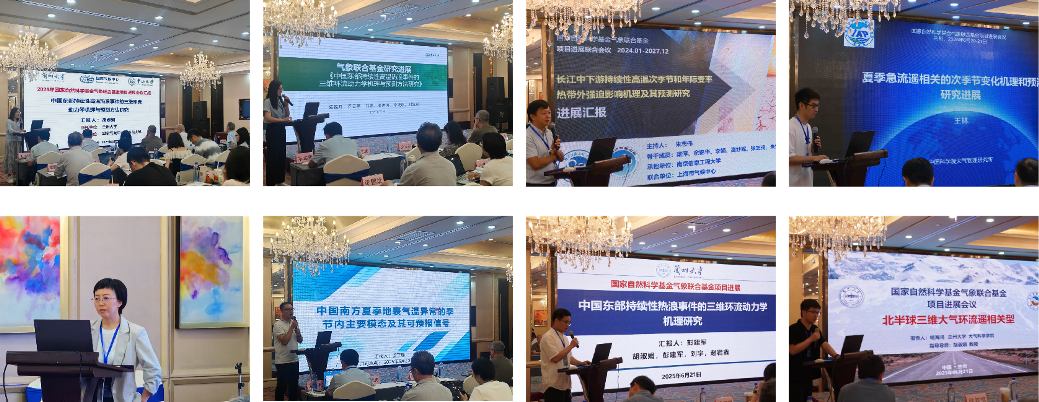
The project leader reports the project progress
The expert panel attentively reviewed progress reports from the project and its sub-projects, offering critical and constructive feedback on key aspects including the project's core objectives and framework, cross-project collaboration, and the refinement of landmark achievements. Professor He Jinhai noted that significant research advancements have been made in all projects, and emphasized the need to prioritize the commercialization of research outcomes to enhance practical implementation effectiveness. Researcher Zhu Congwen proposed strengthening mechanism analysis of extreme events, with a focus on addressing challenges in predicting such phenomena. Professor Xu Bangqi highlighted current difficulties in sub-seasonal forecasting research, expressing hope that collaborative efforts among project teams would lead to breakthrough findings.
Hu Shujuan and Zhu Zhiwei, representing the project team respectively, expressed their gratitude to the experts and scholars for their guidance. They emphasized that they would further focus on the research line of the project, strengthen the cooperation among the three projects, continue to promote the progress of the project, and complete all tasks of the project in accordance with the established goals.
