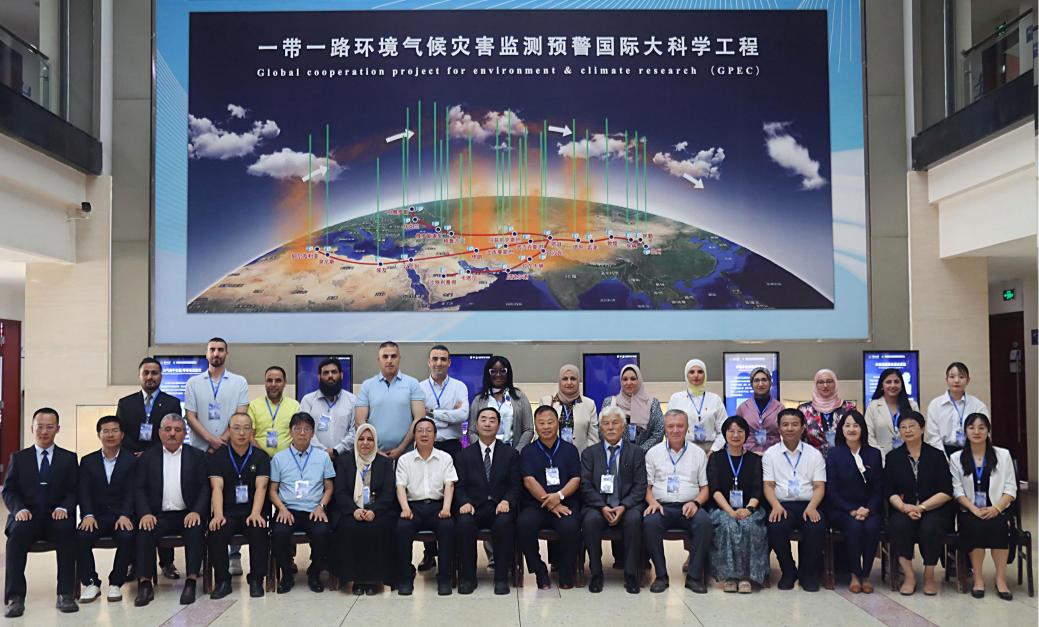
From July 20 to August 3, the International Training Program on Climate Change along the Belt and Road—hosted by the Department of International Cooperation, Ministry of Science and Technology, and organized by Lanzhou University—took place at Lanzhou University. This two-week training program brought together 35 expert participants from 11 countries, including China, Germany, Japan, Egypt, Algeria, Pakistan, Tajikistan, Uzbekistan, and Nepal. The curriculum combined classroom instruction with field excursions, covering key topics related to climate change such as arid zone climate dynamics, water resource management, air pollution, dust transport and its impacts, greenhouse gas mitigation, carbon cycling, and carbon neutrality.Special cultural courses on Chinese history, Chinese character literature, culinary culture, and traditional Chinese medicine were arranged, enabling each participant to deeply explore climate change and response strategies, experience authentic Chinese culture in an engaging way, gain close-up insights into ecological governance practices in China's northwest region, and contribute to advancing global climate governance.
Clash of Wisdom: Addressing Climate Challenges from a Global Perspective
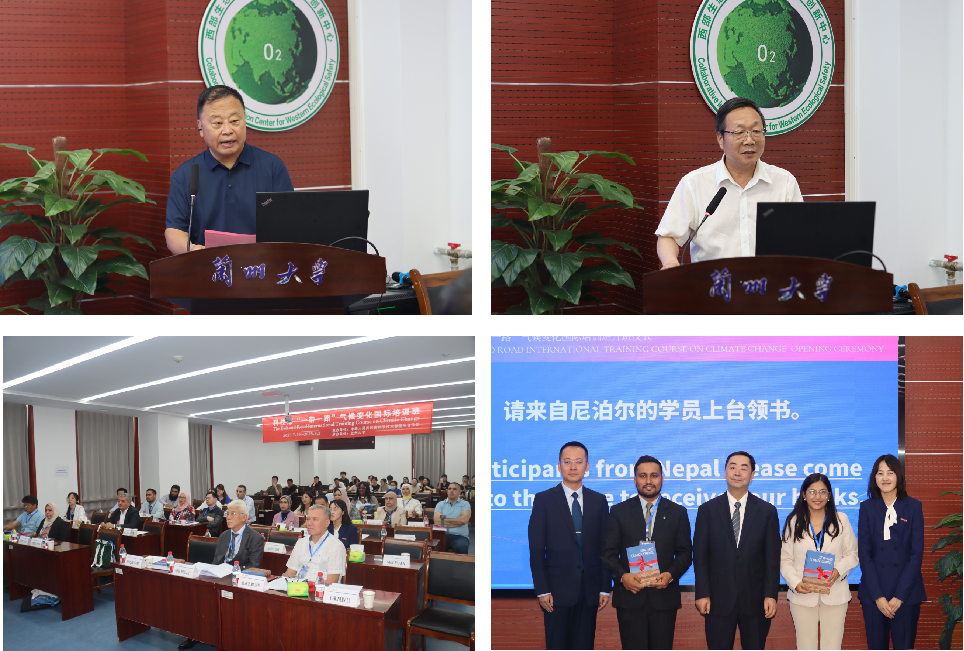
On July 21, the opening ceremony of the training program was held at the Chengguan Campus. Wu Zhiqiang, Second-level Inspector of the Gansu Provincial Department of Science and Technology; Academician Huang Jianping, Vice President Chen Ximeng, and Dean Li Chunlin of the School of International Cultural Exchange from Lanzhou University; along with expert participants from Japan, Egypt, Tajikistan, Uzbekistan, and other countries attended the event. The ceremony was chaired by Professor Guan Xiaodan, Deputy Dean of the College of Atmospheric Sciences.
Wu Zhiqiang emphasized in his speech that scientific and technological innovation is a key force in addressing global climate change. This training program represents a significant step in deepening international scientific collaboration, aiming to enhance the professional capabilities of developing countries in the field of climate change. Chen Ximeng stated that Lanzhou University has always placed great importance on international cooperation, and expressed hope that this training would establish a long-term collaborative platform to promote joint research and technology transfer, thus advancing high-quality development in international scientific cooperation.
Academician Huang Jianping presented each participant with an English monograph titled *SEMI-ARID CLIMATE CHANGE*, authored by his team, and stressed that tackling climate change has never been a solitary endeavor.May this book serve as a bridge, connecting the voices of climate researchers across nations, and enabling us to walk more steadily and farther on our shared journey of protecting the planet.
The opening ceremony also featured speeches from representatives of the lecturers and participants. Professor Mansur Amonov, a foreign lecturer representative from Tashkent Institute of Irrigation and Agricultural Mechanization Engineers in Uzbekistan, mentioned that Lanzhou University has been actively building the "Belt and Road" climate and environmental observation network in recent years, establishing two monitoring stations in Tashkent and Bukhara. "These stations complement existing local air quality monitoring networks and play a crucial role in monitoring and early warning of climate-related disasters," he said. Irene Nooping, a participant representative from Cameroon's National Climate Change Observatory, quoted the African proverb: "If you want to go fast, go alone,but collaboration leads to progress." calling on participants from all countries to work together, transforming climate challenges into opportunities for development. During his speech as a representative of the participants, Achyut Gaire, Assistant Professor at Tribhuvan University in Nepal, shared his strong interest in innovative technologies such as renewable energy and climate-smart agriculture, expressing his hope to apply this knowledge to climate action in Nepal. As a scholar, he looks forward to deepening his understanding of regional climate impacts through this training and exploring solutions that balance development with environmental protection.
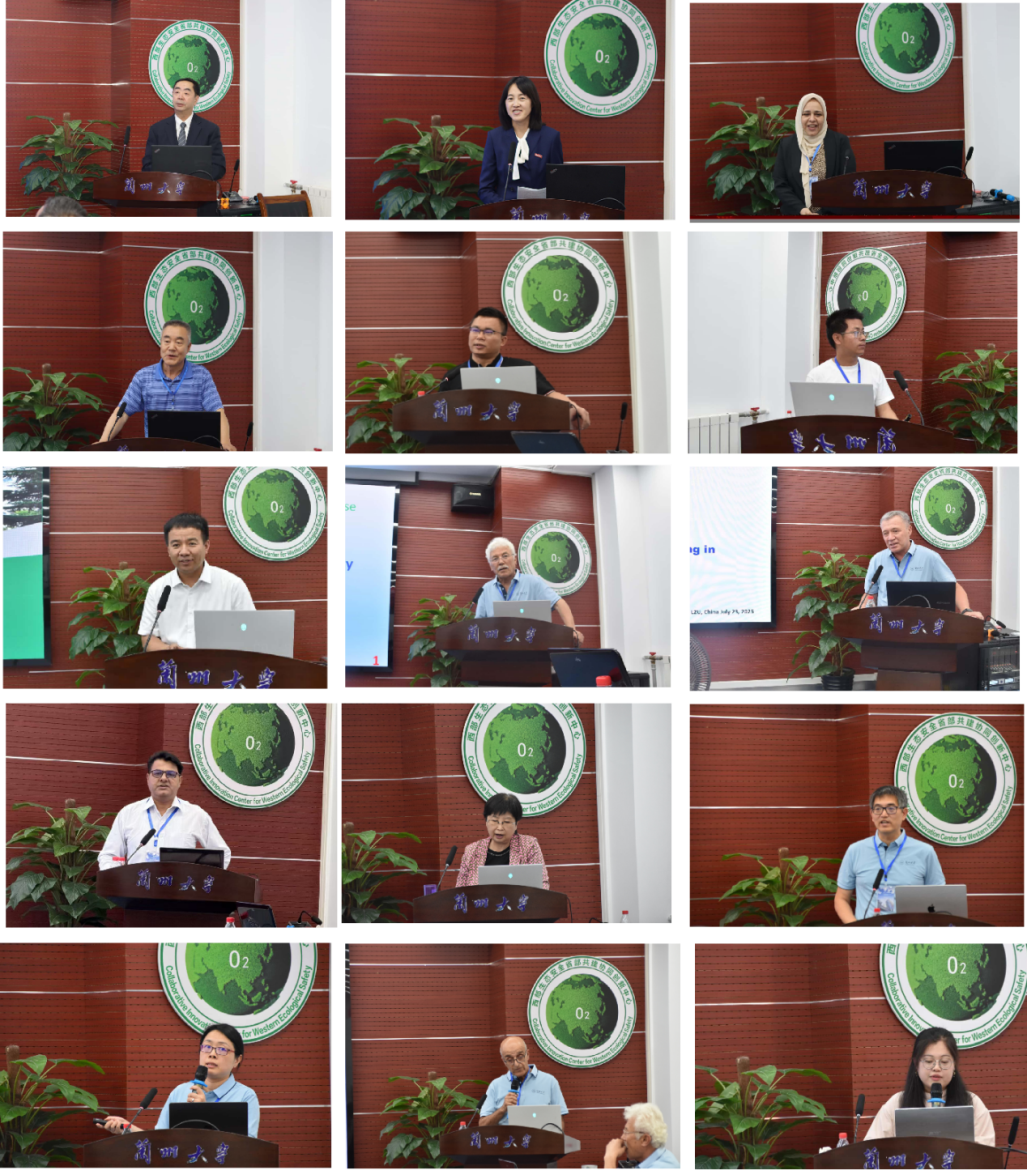
On July 21, Academician Huang Jianping and Professor Guan Xiaodan systematically explained the issues of semi-arid climate change and desertification control, highlighting that 15% of the world's land area faces threats from land degradation, and proposed an integrated management strategy based on historical data and future projections. Doaa Amin, researcher and director of Egypt’s National Water Research Center, focused on the impact of climate change on water resources in the Nile Basin, offering an in-depth analysis of how shifting climates threaten the water systems upon which 300 million people depend. She advocated using ensemble modeling and adaptive management to address uncertainties and ensure basin-wide water security. Professor Long Ruijun from Lanzhou University explored the potential for methane reduction in ruminant livestock, emphasizing that animal agriculture accounts for 14.5% of global greenhouse gas emissions.and proposed the feasibility of achieving emission reductions through technological approaches such as feed improvement.
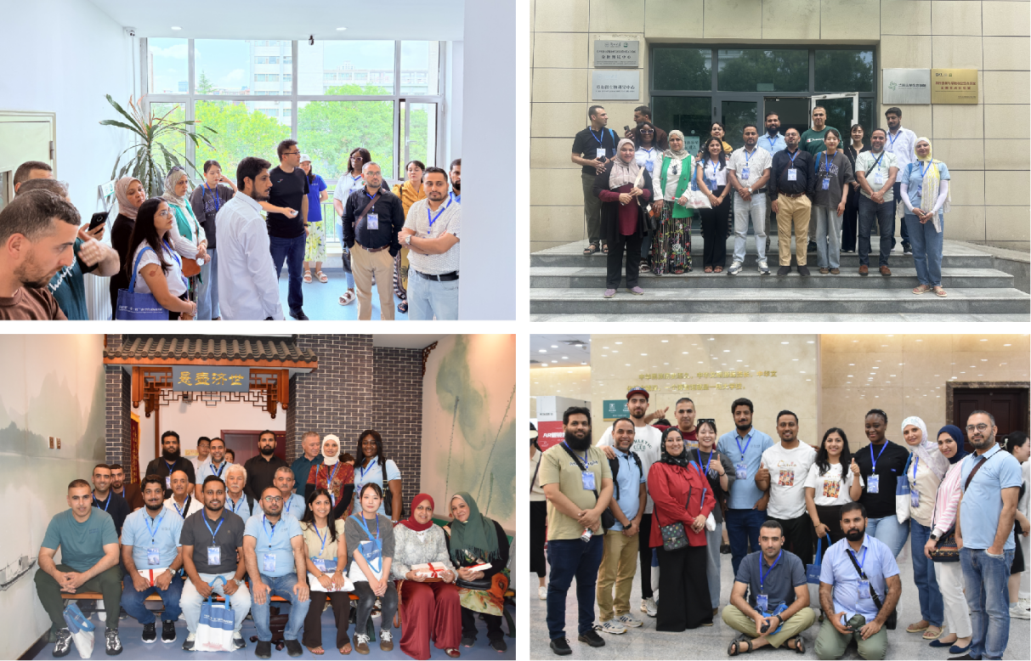
On July 22, Professor Kenji Kai from Nagoya University in Japan demonstrated to the trainees the observation and analysis of dust hotspots in the Mongolian Gobi region. Through the established lidar observation network, he analyzed the origin and transport mechanisms of dust storms, revealed the role of topographic convergence zones in the formation of dust hotspots, and explored the deposition patterns of dust particles during long-distance transport. Professor Huang Zhongwei from Lanzhou University systematically explained the long-distance transport of African dust and its impact on the climate and environment of East Asia, and introduced the application of the Belt and Road Climate and Environment Observation Network (GCON), which spans Asia and Africa, in the study of long-distance dust transport and its climatic effects. Professor Bi Jianrong from Lanzhou University introduced an aerosol optical parameter measurement technology that has achieved continuous day-night monitoring and evaluation of the accuracy of two lunar radiometric calibration methods in nighttime aerosol optical depth (AOD) observations, providing a new solution for all-weather aerosol monitoring. Director Niu Junqiang from the First Affiliated Hospital of Lanzhou University profoundly elucidated the core concepts of the holistic view and syndrome differentiation in traditional Chinese medicine, and discussed the possibility of complementary integration between traditional Chinese medicine and modern medicine through practical case studies. After the lecture, Niu Junqiang also invited the trainees to visit the Traditional Chinese Medicine Comprehensive Treatment Room at the First Affiliated Hospital of Lanzhou University for an on-site experience, allowing them to appreciate the charm of traditional Chinese medicine therapy.
On July 23, Professor Sabur Abdullaev from the Academy of Sciences of Tajikistan presented an analysis of temperature and precipitation trends in Central Asia based on nearly 40 years of observational data from 1982 to 2021. He highlighted the significant urban warming effect in the capital city driven by rapid urbanization and shared findings on air quality monitoring and aerosol composition during dust storm events in Tajikistan. Professor Mansur Amonov from Tashkent Institute of Irrigation and Agricultural Mechanization Engineers in Uzbekistan discussed the climate-related challenges facing Uzbekistan—a region highly vulnerable to climate change—including the ecological crisis of the Aral Sea and growing water scarcity. He also provided insights into the operation of the Tashkent and Bukhara observation stations jointly established by China and Uzbekistan, emphasizing their practical value in supporting the development of the Green Silk Road.In the afternoon, participants visited the National Key Laboratory of Grass Seed Innovation and Grassland Agro-Ecosystem at Lanzhou University.
On July 24, Professor Khan Alam from the University of Peshawar, Pakistan, revealed through comparative studies the distinct impacts of dust and anthropogenic aerosols on cloud microphysical properties and radiative fluxes, and analyzed the linkage mechanism between extreme precipitation events and changes in aerosol characteristics. Professor Yumimoto Keiya from Kyushu University, Japan, introduced to participants the aerosol data assimilation system currently being jointly developed by the Japan Meteorological Agency and JAXA, demonstrated the integration of satellite observations with numerical models for aerosol forecasting, and discussed future research directions. Associate Professor Yuan Mei from Lanzhou University shared insights from her two courses, "A Brief History of Chinese Civilization" and "Chinese Culinary Culture,"Integrating the wisdom of five thousand years of civilization with modern sustainable development concepts to help participants gain a deeper understanding of Chinese culture.
On July 25, Professor Chao Li from the Max Planck Institute for Meteorology in Germany presented the application of Integrated Assessment Model (IAM) in carbon neutrality pathway prediction, comparing the advantages of traditional scenario modeling with the new climate-human coupled model (FRIDA), and exploring systematic solutions for achieving carbon neutrality. Professor Hongmei Li from the Helmholtz Center in Germany explained the use of Earth System Models in predicting carbon fluxes and atmospheric CO? concentrations, analyzing the interaction between climate variability and carbon cycles to provide scientific support for carbon neutrality policies. Professor Hocine Ali-Khodja from Constantine I University in Algeria utilized long-term observational data to assess the contribution rate of Sahara dust to PM10 pollution in Algerian cities, evaluated the effectiveness of local industrial emission reduction measures, and proposed comprehensive governance strategies addressing both cross-border dust pollution and localized contamination. Dr. Zhang Piao from Lanzhou University demonstrated the wisdom of Chinese ideographic language through analyzing typical features of Chinese phonetics, vocabulary, grammar, and characters, while integrating meteorological terminology teaching to help participants appreciate the linguistic ingenuity of the Chinese language.
Seeking Truth through Practice: Exploring China's Approach to Ecological Governance
From July 27 to 30, participants conducted field visits to Minqin, Zhangye, and other locations. At the Babusha Forest Farm, they personally engaged in straw-checkerboard sand fixation techniques, studied the growth conditions and characteristics of desert-adapted plants, and gained deep insight into the decades-long struggle of three generations of sand controllers. They experienced firsthand the remarkable transformation of Babusha—from a landscape once defined by "desert advancing, people retreating" to one now marked by "people advancing, desert retreating." The inspiring story of six elderly villagers and their families battling shifting sands over forty years left a profound impression. "This integrated approach combining technological innovation with traditional wisdom in desert control is truly remarkable," said Farhana Gul, a participant from Pakistan.
At the Minqin Desertification Control Comprehensive Experimental Station in Gansu Province, participants visited the anti-desertification science popularization center and the Minqin station of the "Belt and Road" Initiative Climate and Environment Observation Network. They learned about the operation of sandstorm monitoring systems and gained hands-on experience in routine maintenance procedures, as well as data processing and application. In Zhangye, they toured demonstration sites for agricultural and grassland ecological conservation in the Qilian Mountains, which gave them a clear understanding of the importance of ecosystem protection.

A successful conclusion: writing a new chapter in climate governance On the morning of August 1, the training course held a presentation of students' achievements
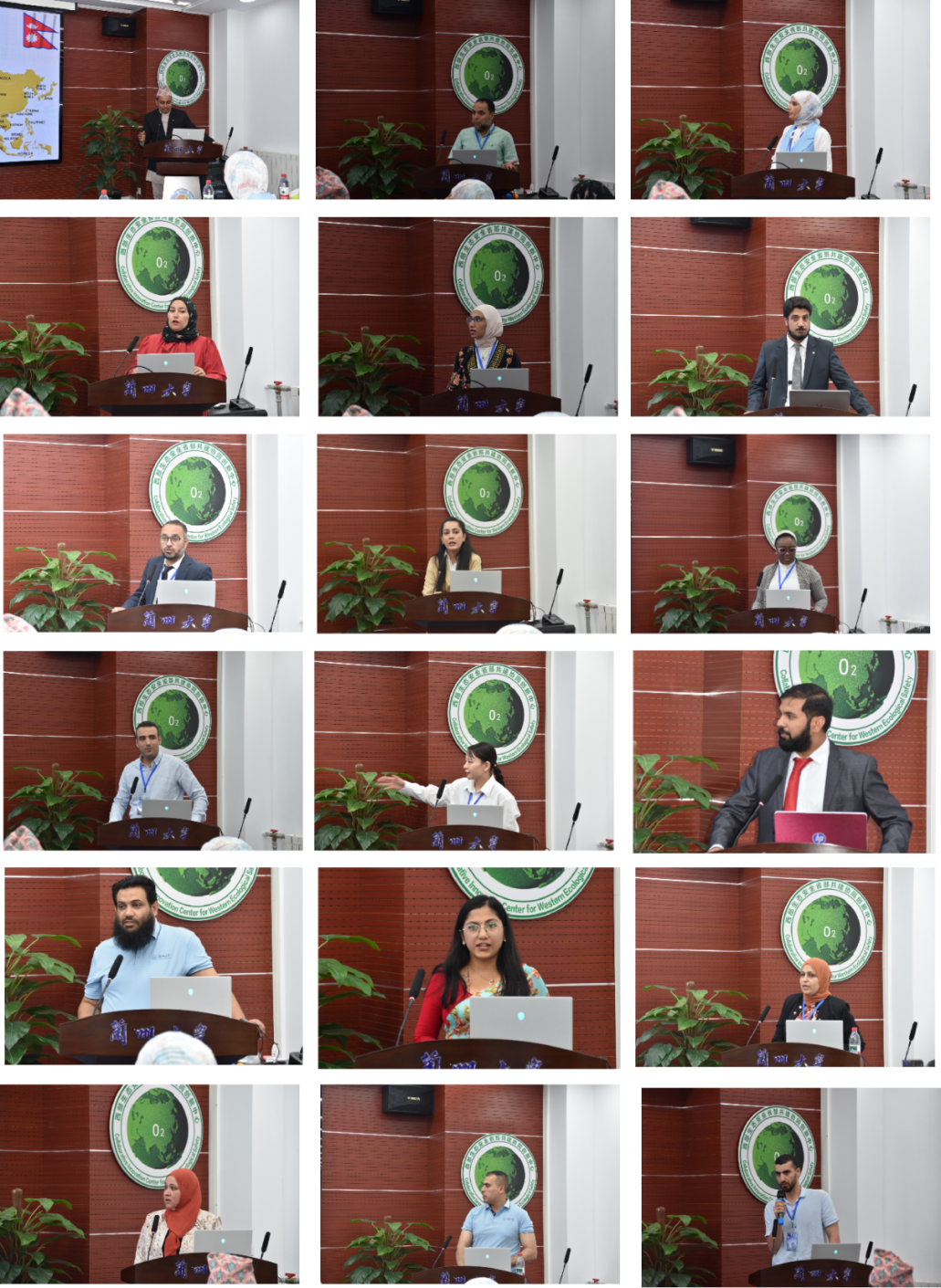
Students from various countries introduced their basic information and climate change status, their professional research results and strategies related to climate change.
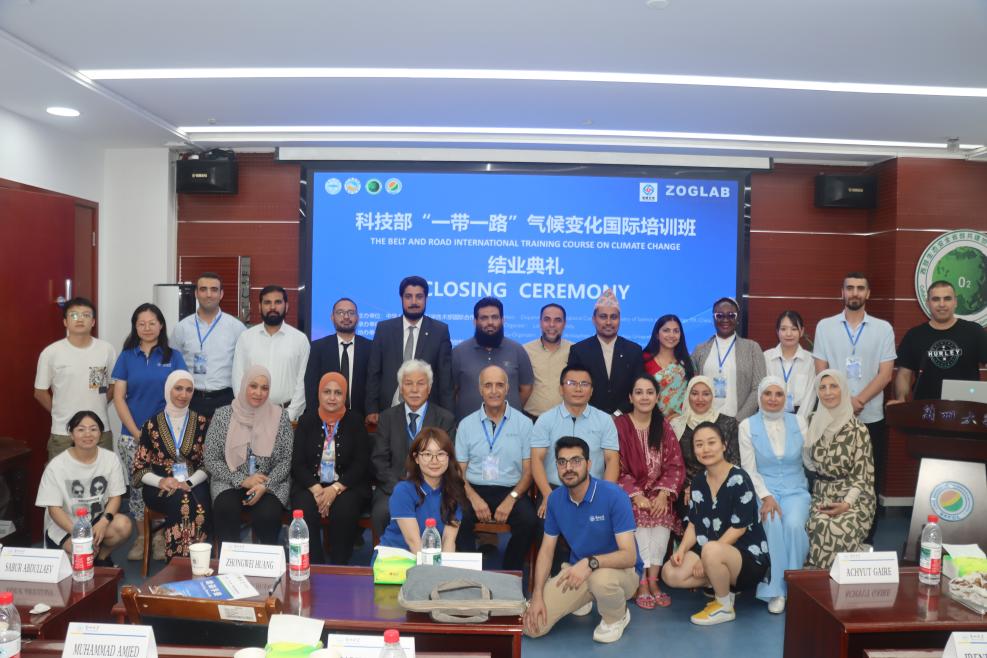
On the afternoon of August 1st, the closing ceremony of the training program was held at Guanyun Building 2009, hosted by Qazi Hashir Zahoor, a Pakistani doctoral candidate. A ten-minute documentary video showcasing the two-week learning journey was screened during the ceremony. Professor Sabur Abdullaev, representing the foreign faculty, expressed gratitude to all participants and highly praised the program's outcomes, proposing to establish a long-term cooperation mechanism. Professor Hocine Ali-Khodja remarked: "This training program has made us realize that cross-border collaboration is not just a concept but a tangible reality." Professor Huang Zhongwei emphasized that the program was merely the beginning, expressing anticipation for maintaining close ties with participants to foster more practical cooperation in scientific research and talent development. After speeches by three trainees from Pakistan, Algeria, and Japan, attending professors presented graduation certificates to all participants and took a group photo as a memento.
The "Belt and Road" International Climate Change Training Program effectively enhanced the monitoring, assessment, and adaptation capabilities of participating countries in the field of climate change by establishing an exchange platform and sharing knowledge and experience, particularly China's practices in ecological governance. It also promoted regional scientific and technological cooperation and mutual learning. Through theoretical discussions and practical field trips, participants not only improved their professional skills but also gained a deeper understanding of the necessity of collaborative efforts to address global challenges. This has contributed positively to deepening climate cooperation under the "Belt and Road" framework, jointly advancing green and low-carbon transitions, and achieving sustainable development goals.
The training program attracted 132 officials and technical personnel from 18 countries specializing in climate change. After rigorous selection, 18 participants were ultimately chosen from Algeria, Egypt, Pakistan, and other nations. Professor Huang Zhongwei, Dean of the College of Atmospheric Sciences at our university, served as the project leader. The program received funding from multiple initiatives including the Ministry of Science and Technology's Developing Countries Technical Training Program, the National Bureau of Foreign Experts Affairs' 111 Innovation and Intelligence Introduction Base Project, the National Natural Science Foundation of China's Key International Cooperation Project "Research on the Evolution of Long-Distance Sahara Dust Transport to East Asia and Its Impact on Precipitation in China", the Ministry of Science and Technology's Key R&D Program "International Cooperation Project on Climate Change's Impact on Water Resources in the Nile Basin and Adaptation Strategies", and Gansu Province's Major Science and Technology Special Project "Research on Long-Distance Eastward Transport of African Dust and Its Environmental and Climatic Impacts in Northwest China". It also received substantial support from Anhui Landun Optoelectronics Co., Ltd. and Zog Microsystem (Hangzhou) Co., Ltd. [Section]
Text: Wang Huiyan Photos: Wang Huiyan, Chi Xuwen Edited by: Liu Chang
