

Meeting scene
On November 25, the 2025 Lanzhou Workshop on Earth System Numerical Prediction was successfully held at Lanzhou University. Nearly 200 experts and scholars gathered by the Yellow River to focus on key scientific issues and core technologies of Earth system numerical prediction, including multi-sphere coupling in arid regions and complex terrain. In-depth discussions were held on national strategic meteorological services for new energy, modern agriculture, intelligent transportation, and the low-altitude economy. At the workshop, the Earth System Numerical Prediction Research Center of Lanzhou University was officially inaugurated.
The event was attended by Wang Xu, Vice Governor of Gansu Province; Cao Xiaozhong, Vice Administrator of the China Meteorological Administration (CMA); Ma Xiaojie, Secretary of the Party Committee of Lanzhou University; Yang Yongping, President of Lanzhou University; Academician Zhang Renhe and Academician Huang Jianping of the Chinese Academy of Sciences; Academician Song Junqiang, Academician Shen Xueshun, and Academician Zhang Qiang of the Chinese Academy of Engineering; Zhang Guozhen, Secretary and Director of the Department of Education of Gansu Province; Liu Peng, Secretary and Director of the Department of Transportation of Gansu Province; as well as leaders and experts from relevant government departments, the meteorological system, peer universities, research institutes, the military, and industrial enterprises. The opening ceremony was presided over by Cao Hong, Executive Vice President of Lanzhou University.
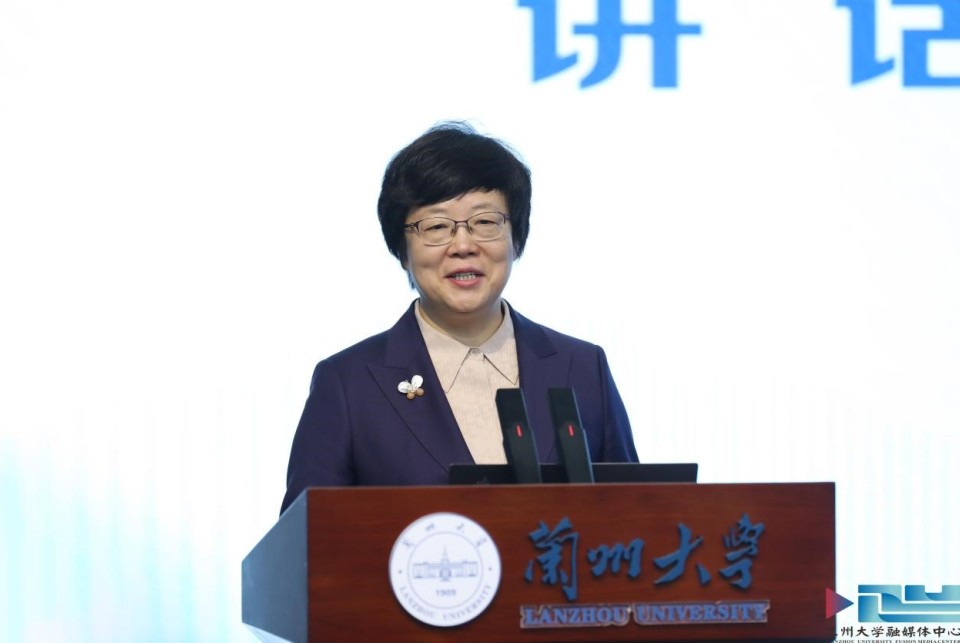
Speech by Wangxu
Wang Xu stated that General Secretary Xi Jinping has emphasized that meteorological work is vital to life safety, production development, a prosperous life, and sound ecology. The Fourth Plenary Session of the 20th Central Committee of the Communist Party of China called for strengthening meteorological, hydrological, and geological disaster monitoring, forecasting, and early warning, and improving capabilities in disaster prevention, mitigation, relief, and response to major public emergencies. The establishment of the Earth System Numerical Prediction Research Center by Lanzhou University is of great significance for deepening research, promoting collaborative innovation in meteorological science and technology, and upgrading China’s meteorological modernization. She hoped that Lanzhou University would keep in mind the earnest instruction of “running a first-class university in Northwest China,” serve major national strategies, integrate scientific and technological innovation with industrial innovation, cultivate and gather young scientific and technological talents, and contribute more to enhancing the overall efficiency of the national innovation system. She urged the center to align with practical needs in ecological civilization, disaster prevention and mitigation, and climate response, develop new theories, open new fields, explore new paths, and build a national key tool for numerical prediction with Chinese characteristics. She also asked the CMA to continue supporting Gansu and Lanzhou University in major projects, technological capacity building, platform development, and meteorological data integration. Gansu Province will consistently support Lanzhou University and the center.
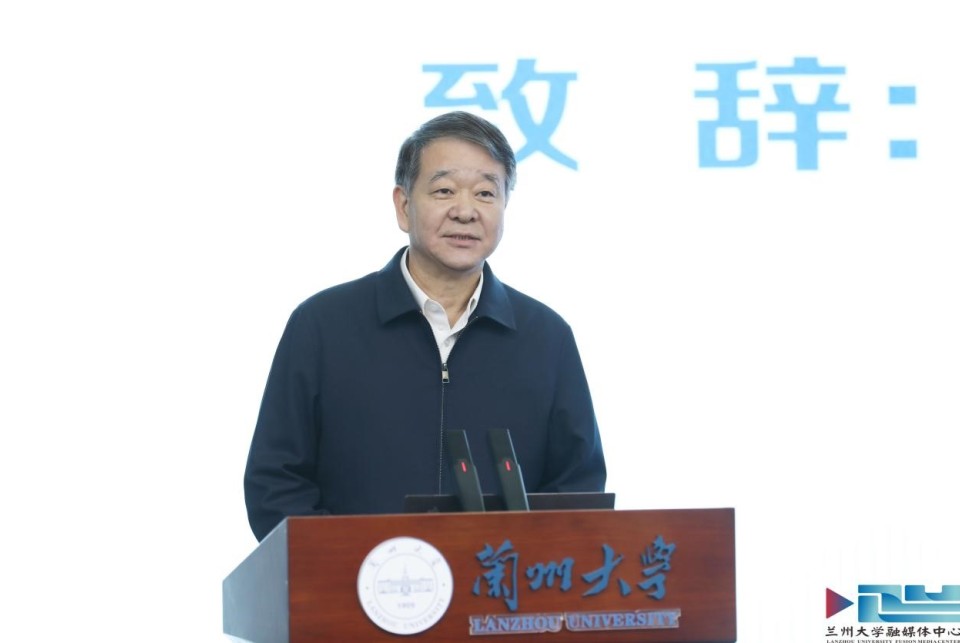
Speech by Ma Xiaojie
Ma Xiaojie welcomed the guests on behalf of Lanzhou University. He noted that the Fourth Plenary Session of the 20th Central Committee has set goals for strengthening scientific and technological innovation, disaster prevention, and building a Beautiful China, pointing the way for developing independent and controllable Earth system numerical prediction technology.Looking ahead, Lanzhou University will focus on cutting-edge fields and strengthen organized research to enhance the independence and refinement of China’s numerical prediction, promote interdisciplinary integration to build an open platform and empower new energy, ecological governance, and modern agriculture through “meteorology +”, and connect the innovation chain to deepen government–university–research–industry collaboration, advance data sharing, platform co-construction, and talent co-cultivation, and support meteorological disaster prevention and western ecological security.
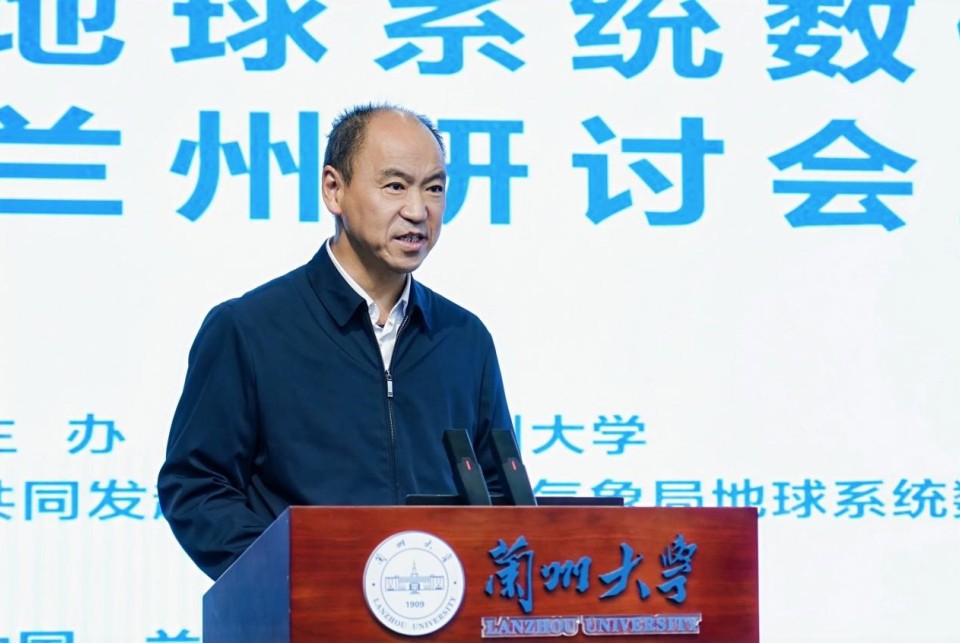
Speech by Cao Xiaozhong
Cao Xiaozhong stated in his speech that numerical models are the "chip" of weather forecasting and a "critical national asset," and that the Party and the state attach great importance to the research and development of key numerical prediction technologies. The establishment of the Earth System Numerical Prediction Research Center at Lanzhou University is an important step toward building a strong meteorological nation and a vivid practice of deepening and solidifying university–bureau cooperation. First, it is necessary to focus on strategic needs and shoulder the mission of achieving self-reliance and strength in science and technology. He expressed the hope that the Center will conduct systematic, forward-looking, and strategic research addressing major national needs in areas such as ecological civilization, climate change, and disaster prevention and mitigation, strive to achieve breakthroughs in original key technologies, and build a western base for a "Chinese model" with international influence. Second, it is essential to strengthen open cooperation and foster a sound ecosystem for industry-university-research application. He called for fully leveraging the synergistic advantages of "bureau–university–local government–enterprise" partnerships to promote data sharing, joint talent cultivation, and co-utilization of achievements, thereby facilitating the efficient transformation of research outcomes into operational capabilities and service products. Third, efforts should be made to advance discipline development and enhance the cultivation of interdisciplinary and composite talents. He emphasized the importance of fully utilizing disciplinary strengths, taking the integration and application of cutting-edge technologies such as artificial intelligence and quantum technology in the meteorological field as a lever, and vigorously cultivating high-level composite talents who can meet the demands of high-quality meteorological development.

Speech by Zhang Qiang
Academician Zhang Qiang, Director of the Earth System Numerical Prediction Research Center at Lanzhou University, stated that the Center will focus on key directions and strive for breakthroughs, dedicating itself to building an independent and innovative next-generation digital twin platform for the Earth system in arid regions. The Center will effectively apply its innovative achievements to key scenarios such as new-type power systems, dryland agriculture, smart transportation, and the low-altitude economy, transforming higher-precision forecasting capabilities into tangible productivity, and promoting the formation of a distinctive highland for meteorological science and technology innovation in arid regions.
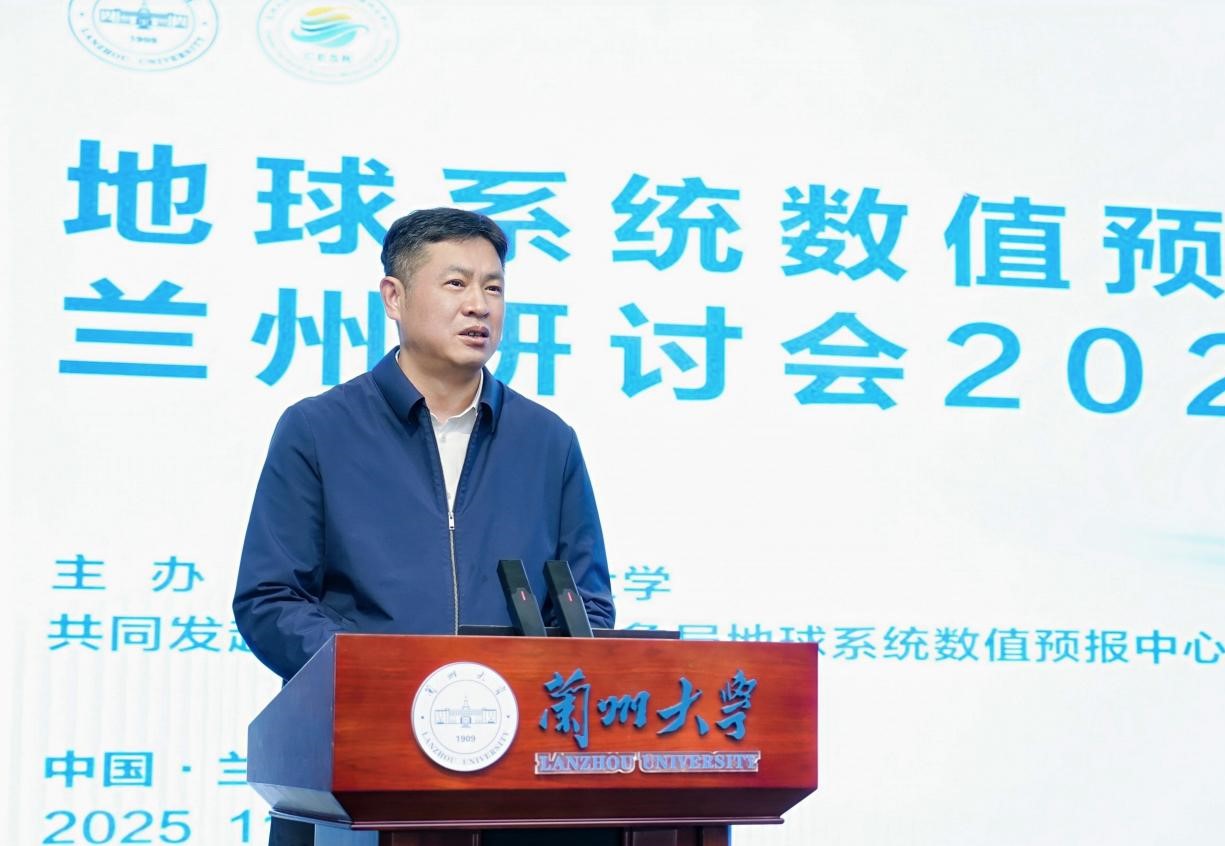
Speech by Chen Haishan
Chen Haishan, President of Nanjing University of Information Science and Technology, stated in his speech that he looks forward to establishing closer and more pragmatic cooperative relationships with Lanzhou University in areas such as joint talent cultivation, collaborative research on key scientific challenges, and sharing of platform resources. Together, they aim to make new and greater contributions to building an Earth system numerical prediction system with independent intellectual property rights in China, and to accelerating the construction of a strong meteorological nation, a strong education nation, and a strong science and technology nation.

Speech by Ji Hong
Ji Hong, President of Lanzhou University of Technology, stated in his speech that he looks forward to taking the establishment of the Center as an opportunity to further expand the breadth and depth of cooperation, focus on key "bottleneck" technical challenges in development, organize interdisciplinary teams to conduct joint research, jointly build a complete innovation chain from mechanism research and technology development to equipment application, strive to produce landmark achievements with significant influence, and at the same time, jointly cultivate top-notch innovative talents who are both proficient in their professional disciplines and capable of interdisciplinary integration.
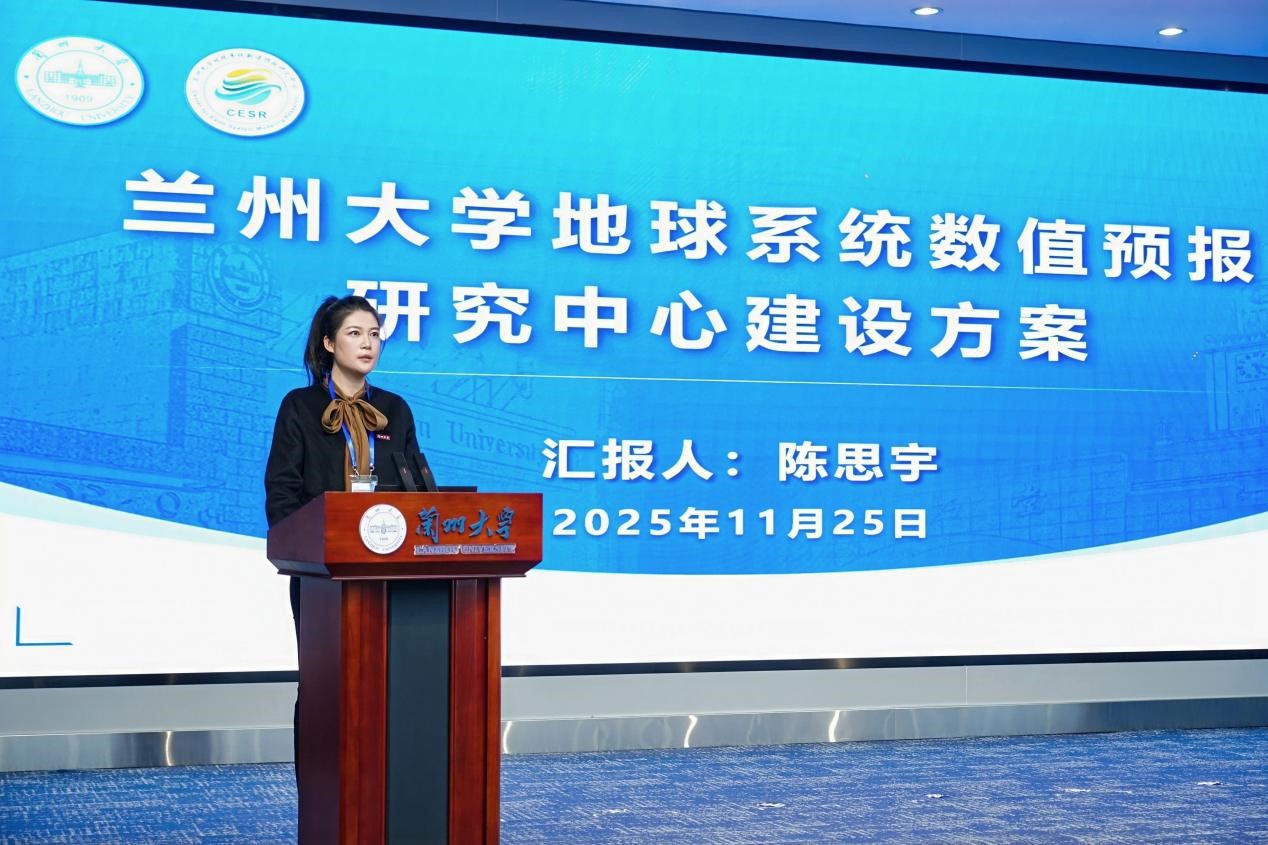
Chen Siyu delivered a report on the construction of the center.
Professor Chen Siyu from the College of Atmospheric Sciences delivered a report on the construction of the center, elaborating in detail on the center's construction plan and development goals from the perspectives of construction background and foundation, construction scheme and expected outcomes, construction objectives and research team, as well as management system and operation mechanism. She stated that the center will closely focus on the frontiers of national meteorological science and technology and the needs of high-quality development in western China, establishing a "1+N" development strategy. The "1" refers to the independent research and development of core technologies for numerical prediction of the Earth system in arid regions, while the "N" refers to the "meteorology+" application paradigms oriented towards the needs of national strategic emerging industries such as new energy, modern agriculture, smart transportation, and the low-altitude economy.

Establishment of the Earth System Numerical Prediction Research Center at Lanzhou University
At the opening ceremony, Wang Xu, Cao Xiaozhong, Ma Xiaojie, and Yang Yongping jointly unveiled the plaque for the Earth System Numerical Prediction Research Center of Lanzhou University.


Signing ceremony at the scene
On-site, Lanzhou University signed an agreement with the Earth System Numerical Prediction Center of the China Meteorological Administration and the Gansu Provincial Meteorological Bureau to jointly establish the "Earth System Numerical Prediction Research Center of Lanzhou University." Subsequently, Lanzhou University signed cooperation agreements with 22 entities, including the Gansu Provincial Meteorological Bureau, the Big Data and Statistics Branch of the China Electricity Council, State Grid Gansu Electric Power Company, Huawei Technologies Co., Ltd., CHN Energy Gansu Electric Power Co., Ltd., China Mobile Communications Group Gansu Co., Ltd., Jinchuan Group Co., Ltd., Huaneng Gansu Energy Development Co., Ltd., Gansu Provincial Academy of Economic Research, Datang Gansu Power Generation Co., Ltd., Jiuquan Iron and Steel (Group) Co., Ltd., China United Network Communications Co., Ltd. Shandong Branch, SPIC Gansu Electric Power Co., Ltd., Gansu Highway Aviation Tourism Investment Group Co., Ltd., CHN Energy Science and Technology Research Institute Co., Ltd., Gansu Computing Center, Inner Mongolia Power (Group) Co., Ltd. Ordos Power Supply Branch, CRRC Taiyuan Locomotive and Rolling Stock Co., Ltd., Dayu Water-Saving Group Co., Ltd., Northern Tianqiong Information Technology (Xi'an) Co., Ltd., Guangzhou Sino-German Light Aircraft Co., Ltd., and Hebei Changfeng Information Technology Co., Ltd., to jointly promote technological innovation in numerical prediction and the deep integration of industry, academia, and research.
During the plenary session, Academician Zhang Renhe, Academician Song Junqiang, Academician Huang Jianping, and other experts delivered keynote reports on topics such as climate change, high-precision Earth system numerical simulation, and low-altitude safety intelligent meteorology. The attending experts agreed that the establishment of the Earth System Numerical Prediction Research Center will provide critical scientific and technological support for the independent development of China's high-precision Earth system prediction system and the achievement of the nation's "dual carbon" goals.

"Foreseeing the Future" Industry-University-Research-Application Roundtable Forum

High-Quality Meteorological Talent Development Forum
The forum also featured a "Foreseeing the Future" Industry-University-Research-Application Roundtable Forum and a Forum on High-Quality Development of Meteorological Talents. Participants engaged in in-depth discussions on the coordinated development of industry, academia, research, and application in Earth system numerical prediction, actively offering suggestions and recommendations for the advancement of numerical prediction.
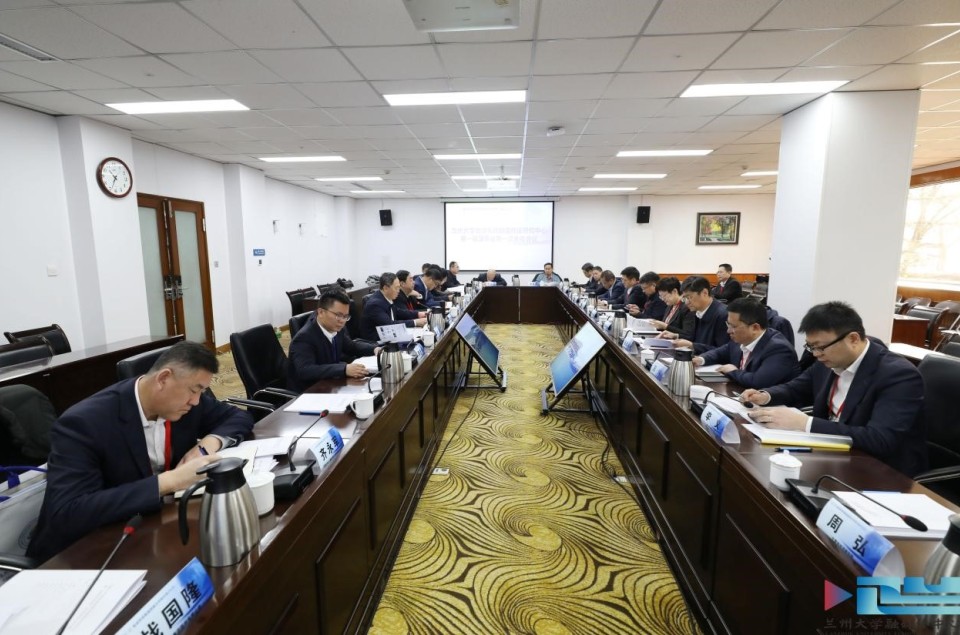
The First Meeting of the First Council in Plenary Session
On the morning of that day, Yang Yongping chaired the First Plenary Session of the First Council of the Earth System Numerical Prediction Research Center of Lanzhou University. Twenty-two enterprises in related fields became founding council member units, engaging in discussions on the Center's development and jointly drawing a blueprint for its future.
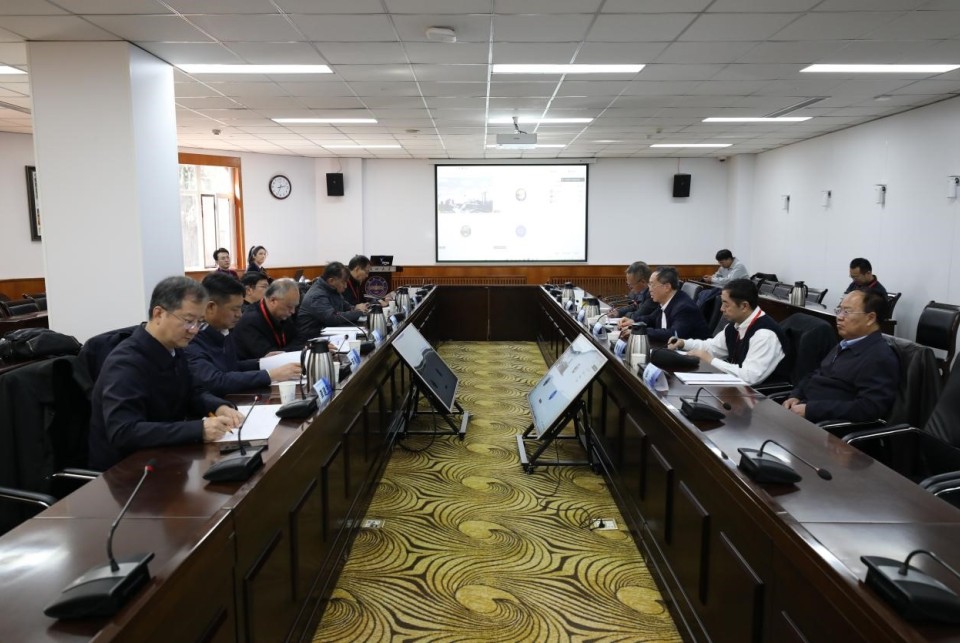
The First Plenary Session of the First Academic Committee
That afternoon, Academician Zhang Renhe, Director of the Academic Committee, presided over the First Plenary Session of the First Academic Committee of the Numerical Prediction Research Center. During the session, Yang Yongping read out the list of members of the Academic Committee and issued certificates. The attending members offered valuable opinions and suggestions regarding the construction and development of the Center.
It is reported that the Earth System Numerical Prediction Research Center of Lanzhou University is an entity-based research institution co-led by Academician Shen Xueshun and Academician Zhang Qiang. As the first research center of its kind in China focused on Earth system numerical prediction at a higher education institution, the Center is committed to playing a leading role in basic research and key technologies for intelligent meteorological and ecological services in arid regions. It aims to strengthen multidisciplinary collaborative innovation, bring together outstanding interdisciplinary teams centered on high-level academic leaders, and provide critical scientific and technological support for the independent development of a high?precision Earth system prediction system in China. The Center strives to establish a scientific and technological innovation pattern for Earth system numerical prediction that is "rooted in western China, serves the whole country, and radiates to Central Asia."
